Artist’s Statement
There is a space between people and place — where we shape the world around us, and it shapes us in return. That is where my work takes root — cultivating ways to build with and for communities by spotlighting the voices within them. Finding ways through design, storytelling, and art curation to enable cultural preservation and innovation.
These ambitions have taken me across public and private sectors, partnering with global teams on projects both intimate and vast — from visual research and heritage branding to multifaceted urban development for cities as varied as Baghdad, Mecca, and New York. My practice spans visual anthropology, cultural programming, and documentary film, grounded in the belief that stories told with care and craft are acts of resistance and healing.
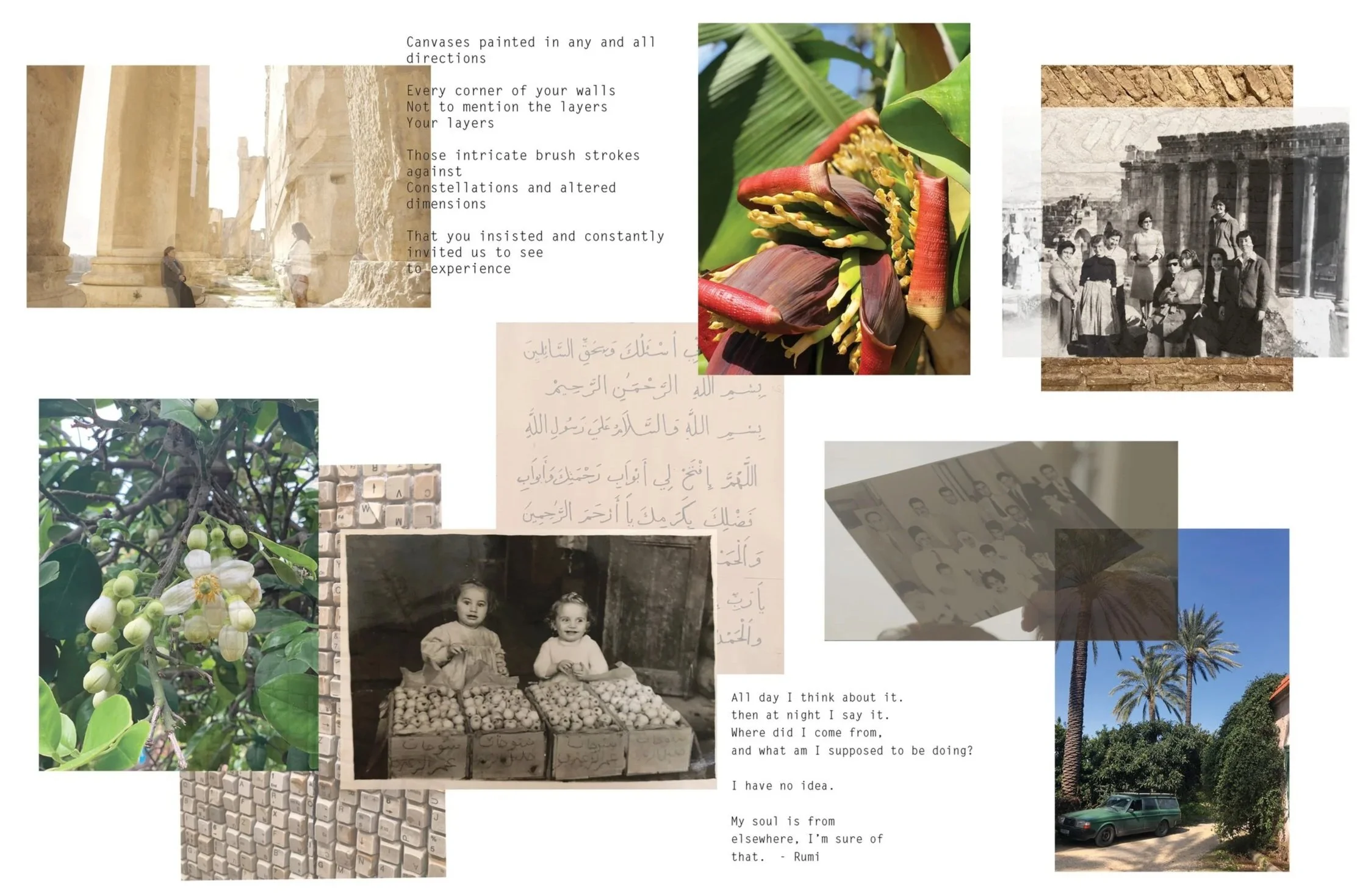
What deepens this urge is my own family history. I am part of the Lebanese diaspora — carrying a longing to preserve the stories, the connection to the land, the embodied memories. At the heart of every project is a search for the deeply seated spirit — Rouh (روح) — of a person, a place, a community. Through close listening and trusted collaboration, something unscripted begins to emerge — unassuming, even wondrous.
Tyme Studio grew from these sentiments and experiences. A boutique documentary film practice dedicated to capturing personal and cultural histories with depth and cinematic intimacy — it took shape slowly and inevitably, from years of such work.
Tyme Studio is one thread in a larger practice — shaped by formal training in Social Anthropology at Harvard and Urban Design and Community Planning at the Architectural Association, and by years of engagement with internationally recognized firms, local artisans, visual artists, and communities across the Americas, Europe, and Asia. Most recently finding form in a children's book series inspired by the poetry of Rumi, and a cross-cultural multimedia exhibition honoring the legacy of a late Haitian artist — two projects that begin with questions I always return to: How can this story be carried forward and shared? What would be lost if it went untold?